
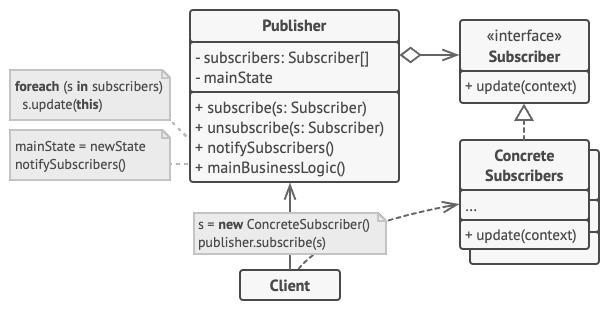
简介:
- 观察者是一种行为设计模式, 允许一个对象将其状态的改变通知其他对象
使用示例: 观察者模式在 TypeScript 代码中很常见, 特别是在 GUI 组件中。 它提供了在不与其他对象所属类耦合的情况下对其事件做出反应的方式。
识别方法: 该模式可以通过将对象存储在列表中的订阅方法, 和对于面向该列表中对象的更新方法的调用来识别。
JavaScript
/**
 * The Subject interface declares a set of methods for managing subscribers.
 */
interface Subject {
    // Attach an observer to the subject.
    attach(observer: Observer): void;

    // Detach an observer from the subject.
    detach(observer: Observer): void;

    // Notify all observers about an event.
    notify(): void;
}

/**
 * The Subject owns some important state and notifies observers when the state
 * changes.
 */
class ConcreteSubject implements Subject {
    /**
     * @type {number} For the sake of simplicity, the Subject's state, essential
     * to all subscribers, is stored in this variable.
     */
    public state: number;

    /**
     * @type {Observer[]} List of subscribers. In real life, the list of
     * subscribers can be stored more comprehensively (categorized by event
     * type, etc.).
     */
    private observers: Observer[] = [];

    /**
     * The subscription management methods.
     */
    public attach(observer: Observer): void {
        const isExist = this.observers.includes(observer);
        if (isExist) {
            return console.log('Subject: Observer has been attached already.');
        }

        console.log('Subject: Attached an observer.');
        this.observers.push(observer);
    }

    public detach(observer: Observer): void {
        const observerIndex = this.observers.indexOf(observer);
        if (observerIndex === -1) {
            return console.log('Subject: Nonexistent observer.');
        }

        this.observers.splice(observerIndex, 1);
        console.log('Subject: Detached an observer.');
    }

    /**
     * Trigger an update in each subscriber.
     */
    public notify(): void {
        console.log('Subject: Notifying observers...');
        for (const observer of this.observers) {
            observer.update(this);
        }
    }

    /**
     * Usually, the subscription logic is only a fraction of what a Subject can
     * really do. Subjects commonly hold some important business logic, that
     * triggers a notification method whenever something important is about to
     * happen (or after it).
     */
    public someBusinessLogic(): void {
        console.log('\nSubject: I\'m doing something important.');
        this.state = Math.floor(Math.random() * (10 + 1));

        console.log(`Subject: My state has just changed to: ${this.state}`);
        this.notify();
    }
}

/**
 * The Observer interface declares the update method, used by subjects.
 */
interface Observer {
    // Receive update from subject.
    update(subject: Subject): void;
}

/**
 * Concrete Observers react to the updates issued by the Subject they had been
 * attached to.
 */
class ConcreteObserverA implements Observer {
    public update(subject: Subject): void {
        if (subject instanceof ConcreteSubject && subject.state < 3) {
            console.log('ConcreteObserverA: Reacted to the event.');
        }
    }
}

class ConcreteObserverB implements Observer {
    public update(subject: Subject): void {
        if (subject instanceof ConcreteSubject && (subject.state === 0 || subject.state >= 2)) {
            console.log('ConcreteObserverB: Reacted to the event.');
        }
    }
}

/**
 * The client code.
 */

const subject = new ConcreteSubject();

const observer1 = new ConcreteObserverA();
subject.attach(observer1);

const observer2 = new ConcreteObserverB();
subject.attach(observer2);

subject.someBusinessLogic();
subject.someBusinessLogic();

subject.detach(observer2);

subject.someBusinessLogic();
Discussion
留言与讨论
想法、补充和不同意见都欢迎。