
简介:
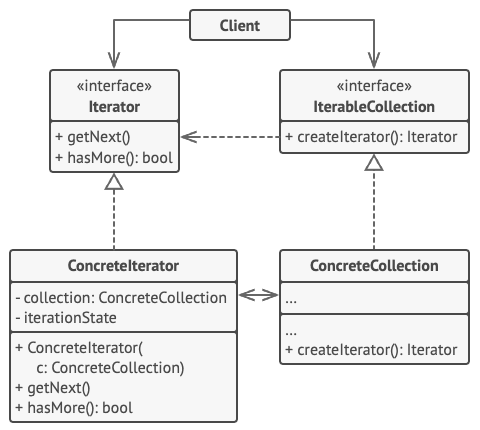
- 迭代器模式是一种行为设计模式, 让你能在不暴露集合底层表现形式 (列表、 栈和树等) 的情况下遍历集合中所有的元素。
使用示例: 该模式在 TypeScript 代码中很常见。 许多框架和程序库都使用它来提供遍历其集合的标准方式。
识别方法: 迭代器可以通过导航方法 (例如 next和 previous等) 来轻松识别。 使用迭代器的客户端代码可能没有其所遍历的集合的直接访问权限。
JavaScript
/**
 * Iterator Design Pattern
 *
 * Intent: Lets you traverse elements of a collection without exposing its
 * underlying representation (list, stack, tree, etc.).
 */

interface Iterator<T> {
    // Return the current element.
    current(): T;

    // Return the current element and move forward to next element.
    next(): T;

    // Return the key of the current element.
    key(): number;

    // Checks if current position is valid.
    valid(): boolean;

    // Rewind the Iterator to the first element.
    rewind(): void;
}

interface Aggregator {
    // Retrieve an external iterator.
    getIterator(): Iterator<string>;
}

/**
 * Concrete Iterators implement various traversal algorithms. These classes
 * store the current traversal position at all times.
 */

class AlphabeticalOrderIterator implements Iterator<string> {
    private collection: WordsCollection;

    /**
     * Stores the current traversal position. An iterator may have a lot of
     * other fields for storing iteration state, especially when it is supposed
     * to work with a particular kind of collection.
     */
    private position: number = 0;

    /**
     * This variable indicates the traversal direction.
     */
    private reverse: boolean = false;

    constructor(collection: WordsCollection, reverse: boolean = false) {
        this.collection = collection;
        this.reverse = reverse;

        if (reverse) {
            this.position = collection.getCount() - 1;
        }
    }

    public rewind() {
        this.position = this.reverse ?
            this.collection.getCount() - 1 :
            0;
    }

    public current(): string {
        return this.collection.getItems()[this.position];
    }

    public key(): number {
        return this.position;
    }

    public next(): string {
        const item = this.collection.getItems()[this.position];
        this.position += this.reverse ? -1 : 1;
        return item;
    }

    public valid(): boolean {
        if (this.reverse) {
            return this.position >= 0;
        }

        return this.position < this.collection.getCount();
    }
}

/**
 * Concrete Collections provide one or several methods for retrieving fresh
 * iterator instances, compatible with the collection class.
 */
class WordsCollection implements Aggregator {
    private items: string[] = [];

    public getItems(): string[] {
        return this.items;
    }

    public getCount(): number {
        return this.items.length;
    }

    public addItem(item: string): void {
        this.items.push(item);
    }

    public getIterator(): Iterator<string> {
        return new AlphabeticalOrderIterator(this);
    }

    public getReverseIterator(): Iterator<string> {
        return new AlphabeticalOrderIterator(this, true);
    }
}

/**
 * The client code may or may not know about the Concrete Iterator or Collection
 * classes, depending on the level of indirection you want to keep in your
 * program.
 */
const collection = new WordsCollection();
collection.addItem('First');
collection.addItem('Second');
collection.addItem('Third');

const iterator = collection.getIterator();

console.log('Straight traversal:');
while (iterator.valid()) {
    console.log(iterator.next());
}

console.log('');
console.log('Reverse traversal:');
const reverseIterator = collection.getReverseIterator();
while (reverseIterator.valid()) {
    console.log(reverseIterator.next());
}
Discussion
留言与讨论
想法、补充和不同意见都欢迎。